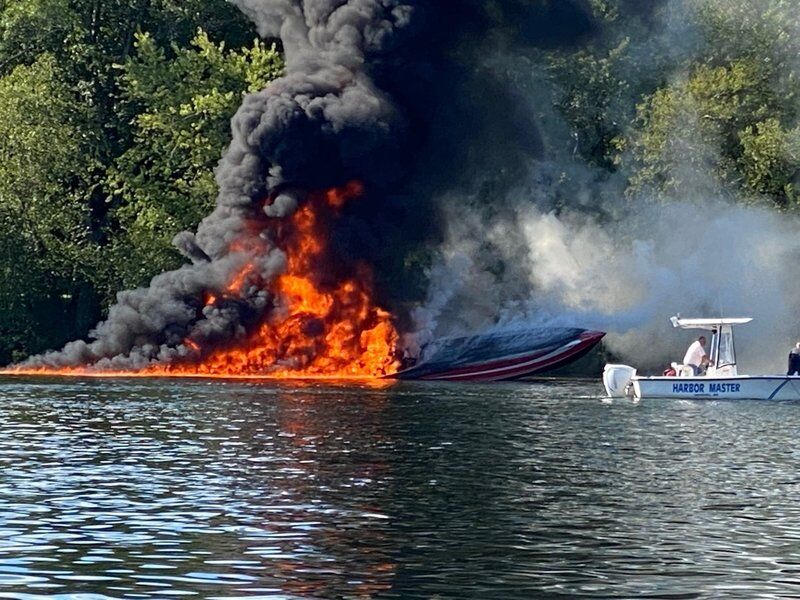
Fire fighting
Fire on board any vessel has the potential to be very dangerous due to the isolation from land and the volatility of on board fuels, ie: petrol, gas etc. Operators of all boats should have the necessary safety equipment installed and know how to use it in an emergency. Taking simple precautions can help prevent a fire and make your boating safer
Action to take
- Warn passengers and make a distress call on your marine radio.
- Shut off fuel lines and gas lines immediately.
- Try to put out the fire using your bucket and fire extinguisher.
- If a burning object can be safely moved, throw it into the water quickly.
- Close all hatches, vents and ports to reduce oxygen.
- Manoeuvre the vessel downwind.
- Keep a close watch on the area once the fire is out.
Use your safety equipment
If your vessel carries fuel on board, or is equipped with an electric start motor, gas installation or fuel stove, you need to have fire fighting equipment. As discussed in Chapter 3: Safety Equipment, a portable fire extinguisher and fire blanket are your two best friends in case of a fire emergency. For more information on the specifics of fire fighting safety equipment, view the lessons and video tutorials in Chapter 3.
Assisting another vessel on fire
As a master your responsibility lies first with your own vessel and all persons on it. Provide what aid you can reasonably give, according to your knowledge and experience, and your vessel’s capabilities.
- Fires on other craft are indicated by large black smoke palls.
- Be extremely cautious as you approach and keep to the windward side of the vessel on fire.
- Remember most fires on small vessels originate from fuel, heating appliances, stoves, leaking gas or cooking fats and oils. Fuel and gas fires spread very quickly. Even a minor spill can create an almost explosive spread of flames