Going beyond compliance
You can look at the list of safety equipment and carry the minimum number of safety equipment onboard. That’s great, but going beyond this compliance is better. Regardless of your area of operation, we recommend you also carry a first aid kit, a V sheet, tool kit, sufficient food and water, an EPIRB, and a personal locator beacon onboard at all times.
GOING BEYOND COMPLIANCE
First aid kit
Choosing the right boating first aid kit will depend on the environment you are planning to travel to. Keeping a first aid kit on the boat is a must, but not just any kit will do. Store-bought kits often fall short of having the supplies for accidents on a boat.
Household first aid kits fall short of having the supplies needed for accidents on the water. Marine, medical kits contain supplies geared toward boating scenarios.
The kit should be kept in a sturdy, watertight plastic container, clearly marked and secured in a position where anyone on board can reach it if necessary. A booklet giving basic first-aid methods is an essential addition to the kit.
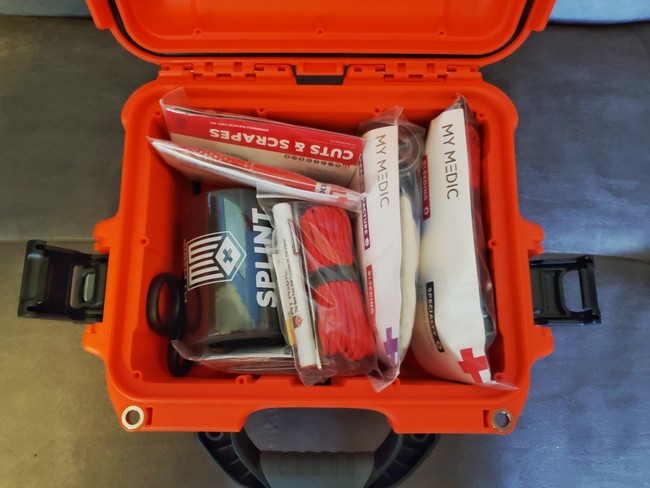
Look for a marine, medical kit that contains all supplies geared toward boating scenarios. Choosing an appropriate fishing first aid kit has much to do with the environment you will be fishing in. you should keep a first aid kit on the boat, but not just any will do.
V sheet
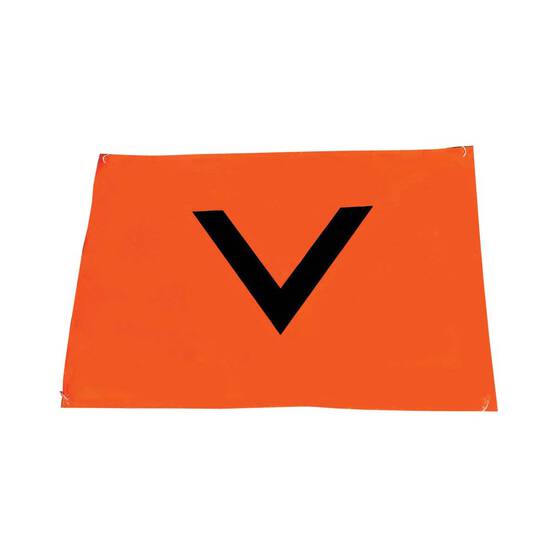
A ‘V’ sheet is a fluorescent orange-red coloured sheet. It is internationally recognised as a distress signal and that you require immediate assistance.
V sheets are printed with a large black ‘V’ printed in the middle, and are typically at least 1.8 metres wide, and 1.2 metres tall.
They can be spread over the deck of a boat or flown as a flag to indicate that you are in trouble.
Tool kit
Boats of all shapes and sizes, especially boats that head into coastal waters, should always be well-stocked with a proper onboard tool kit. Whilst most of your vessel maintenance should be done on dry land, in the event of a breakdown, it’s incredibly reassuring to know that you’re more than likely able to fix the problem and get back on with your trip than be stuck until rescue arrives.
When you’re getting ready to pack your own tool kit, you can pack just 15 things to save the average day or weekend on the water. Most of the items below can be packed into a single, soft-sided tool kit that can live aboard or be moved from boat to boat.
- Multi-tool
- Rigging knife
- Headlamp
- Tape
- Line and string
- Cable ties
- Pliers
- Screwdrivers
- Socket and wrench set
- Spare bulbs, fuses and belts
- Thread locking fluid
- Telescoping mirror and magnet
- Jumper cables
- Spare plugs
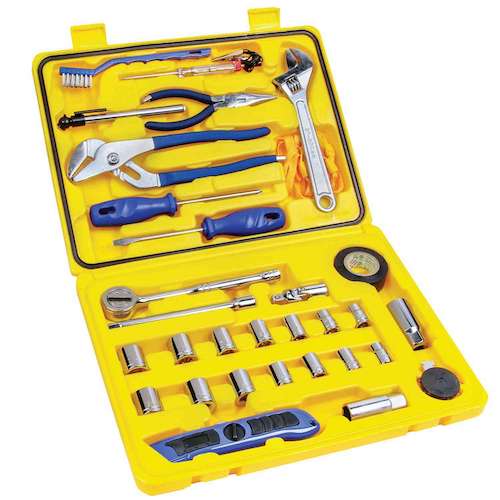
The above is simply a recommended list of equipment; your vessel and the equipment onboard may mean you’ll need more than the above so it’s best to tailor it to your vessel.
Food and water
You’ll find that it boating typically ends up being an all-day affair. This means that it’s a good idea to have spare food and water onboard. But not every snack is appropriate for longer trips. Here’s a few do’s and don’ts for food and water; keep this in mind before you pack up the boat and head out for the day.
DO
Keep in mind how much surface area your boat has in regards to setting the food out for everyone to grab. Depending on the type of boat you have, there may not be a big enough area for a full spread of food. In that case, think about packing food that can be handhelds like sandwiches or personal size snack bags.
Include foods that can sustain while being exposed to high heat and sun all day unless you have extra space in your cooler. Snacks are important second to having ice cold, refreshing beverages for all.
One of the easiest snack options for a big crew or family with kids is to bring individually wrapped food items for grab-and-go convenience. Being on the water isn’t always conducive to serving a bunch of people at one time.
DON’T
There are some foods you will want to avoid for boat days. Avoid anything that can’t withstand the heat such as chocolate. The last thing you want all over your boat is a chocolatey mess. Iceblocks might also sound like a good idea, but most coolers don’t stay cold enough to keep them frozen all day.
You will also want to avoid sticky foods such as candy as that’s the quickest route to a stuck-on mess aboard your vessel. Other things that have the potential of creating hard-to-clean messes are bright-colored drinks such as cordial.
If your boat has carpet, you might want to avoid anything that will get spilled or ground in and leave discoloration behind. On that same note, avoid spillable foods such as salsa that have a watery consistency and can easily spill out of the container.
EPIRB and PLB
Even on waters where an EPIRB is not required, it’s still a good idea to have one onboard. In recent years, Personal Locator Beacons, or PLB’s for short, have risen in popularity with boaters and hikers due to their small size, ease of use and dependency (when maintained).
PLB’s are small and cost effective devices that, when activated, alert emergency services to your position. They work just like an EPIRB, but in half the size.
PLB’s can simply attach to your lifejacket; most of the time you’ll forget you’re even wearing one.
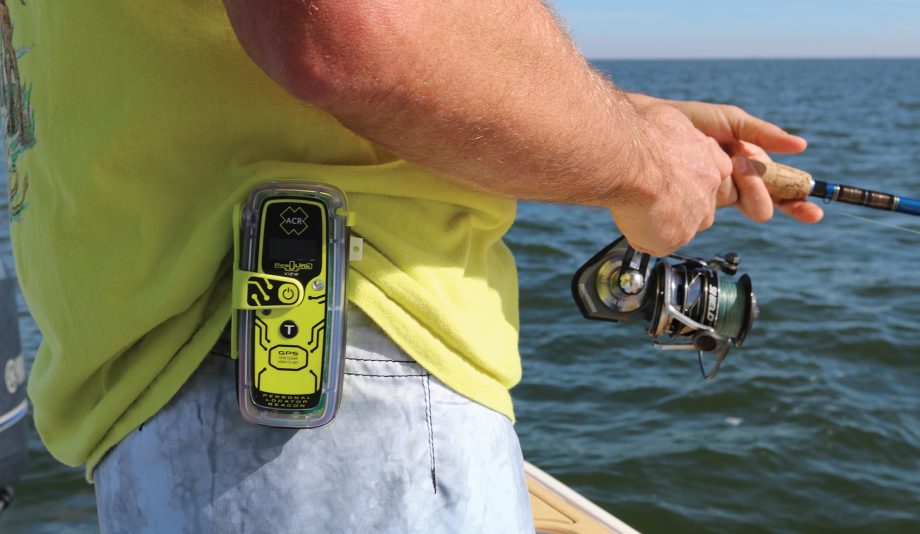 Example of a PLB
Both PLB’s and EPIRBs must be first registered with the Australian Maritime Safety Authority (AMSA). This can be done online here. Remember, activating an EPIRB or a PLB without first registering it with AMSA does nothing and won’t save you.
NOTE
A PLB is not an EPIRB and does not meet the legislative requirements for the carriage of EPIRBs. This means that it cannot replace an EPIRB when you are required to carry one onboard, i.e. on coastal waters.
Attempting the licence exam
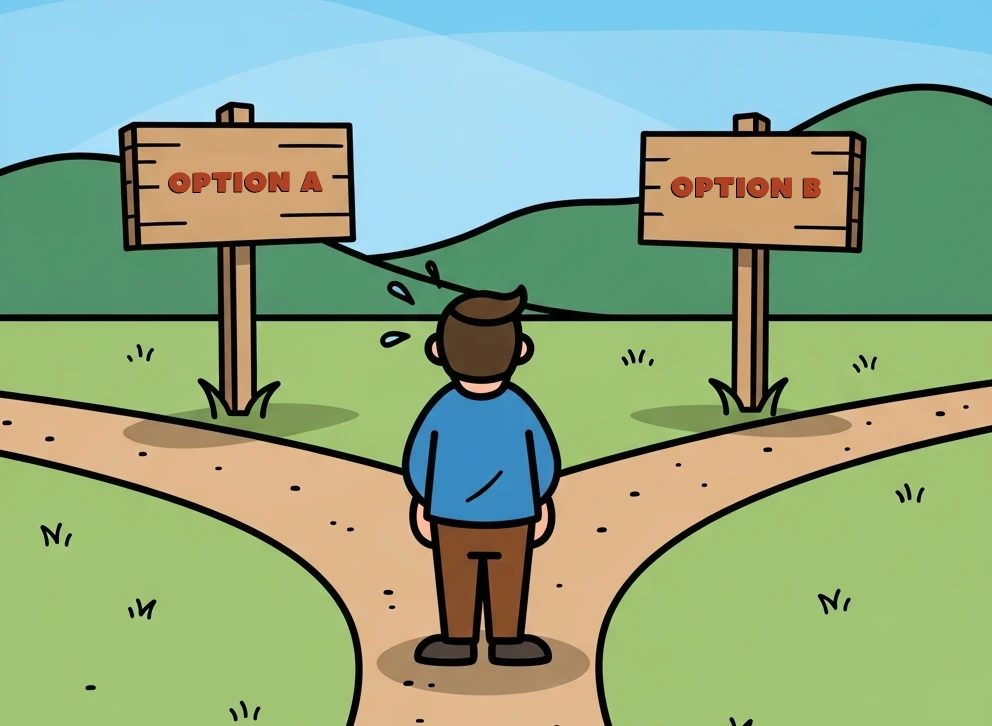
Option A
VicRoads testing: Simply turn up to any VicRoads centre in Victoria for instant licence testing. You can do this anytime, using this course to get the knowledge to smash the test. Immediately get your licence. It’s common for students to take Option A as it is a faster option.
To fast-track straight to the Option A practice exam, click here.
Option B
Zoom revision + testing: Complete this full training course then attend the comprehensive meet and greet zoom revision and testing session, which will take about 2 hours after this course’s education. Certificate will be mailed to you so you can take it into VicRoads to purchase the licence.
For those seeking a deeper dive into maritime safety and responsibility, we offer an exclusive personalised Zoom revision & testing session (Option B). This 2 hour meet and greet experience allows you to meet your trainer, discuss complex case studies, and attempt the licence exam with us instead of VicRoads. It is the ideal choice for students who want to go beyond the basics and gain maximum educational value from their training.
Our personalised Zoom sessions offer a fantastic opportunity to connect with your trainer before you dive in to the licence exam. This 2-hour interactive meeting is designed for more than just a “meet and greet”; it’s your chance to revisit core course topics, ask specific questions, and share a passion for boating with an expert. By the end of the session, you’ll be able to sit the official licence exam. If you prefer, you also have the option to complete your testing at a VicRoads location, skipping this meeting.