Navigation lights
Overview
Navigation lights must be displayed between sunset and sunrise and during times of restricted visibility, such as bushfire smoke or fog. Before going out on the water, check the navigation lights on your vessel are in good working order. When in use, these lights should be clearly visible and free from any obstructions, including passengers standing in front of them.
NAVIGATION LIGHTS
Recreational vessels at anchor
All recreational vessels must show an all-around white light while at anchor. However, if the vessel is drifting (under way but not making way) the vessel must display appropriate navigation lights.
Sail and human powered vessels (under way or drifting)
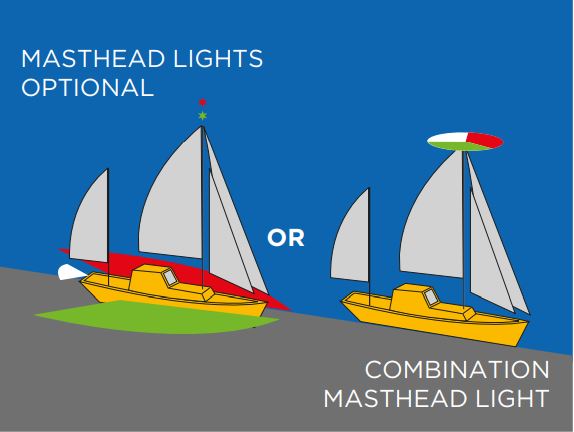
A sailing vessel under way must exhibit side lights and a stern light. If the vessel is less than 20 m in length, the sidelights and stern light may be combined in one lantern tricolour lantern) carried at or near the top of the mast where it can be seen.
In addition to the sidelights and stern light, a sailing vessel may exhibit at or near the top of the mast, where they can be best seen, two all-round lights in a vertical line, the upper being red and the lower being green. These lights must not be exhibited in conjunction with a combined lantern (tricolour lantern).
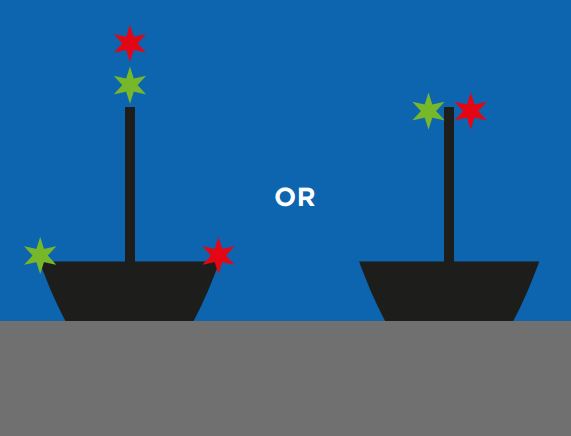
NOTE
Whenever a sailing vessel is using its engine, with or without sails, it is a power-driven vessel within the meaning of the rules, and must act accordingly and show the appropriate shapes by day and lights by night. This means that a tricolour lantern or two red/green masthead lights must not be used under power.
Sailing vessels under way (not using power)
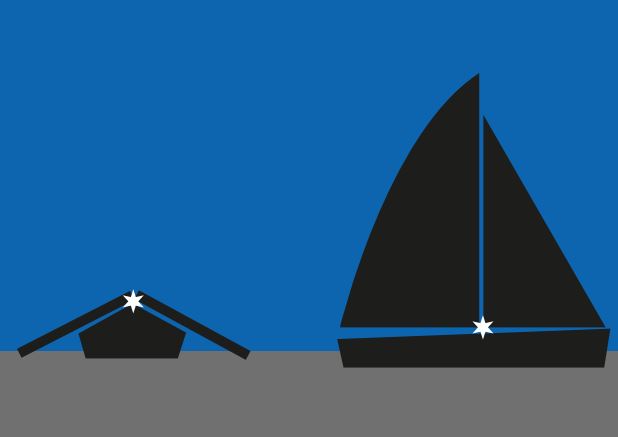
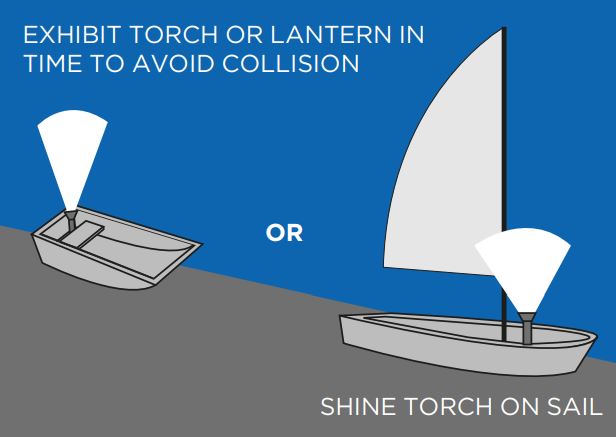
Sailing vessels less than 7 m in length and boats under oars or drifting must, if practicable, display any of the combinations for vessels under sail.
An electric torch or lighted lantern showing a white light and exhibited in sufficient time to prevent collision is an acceptable alternative for these vessels when the lighting configuration described above is not practicable.
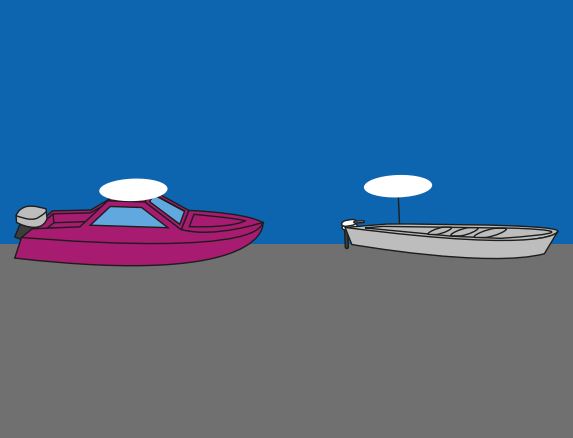
Powerboats (under way or drifting)
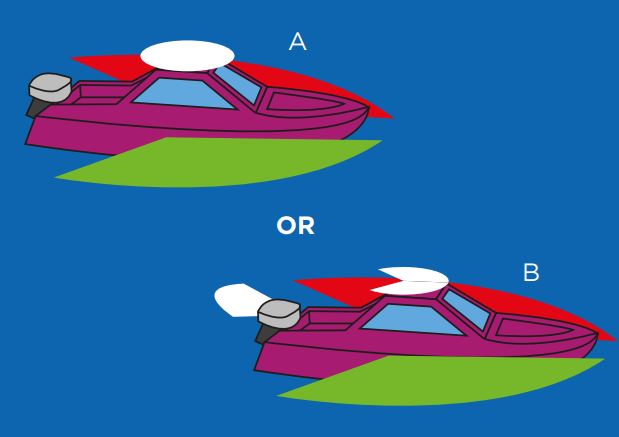
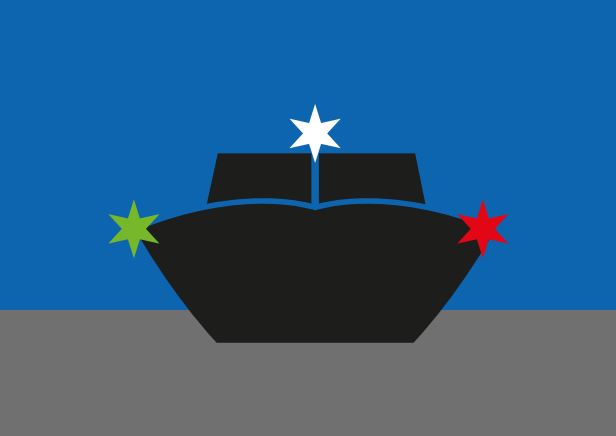
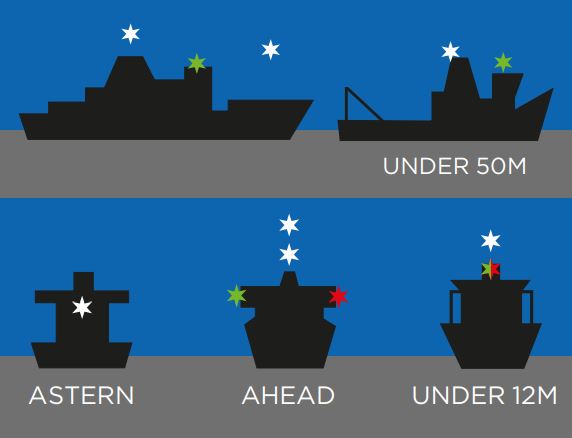
Vessels under 12 m in length must show:
- sidelights and an all round white light
OR
- sidelights, masthead light and a stern light.
Vessels under 7m in length and under 7 knots
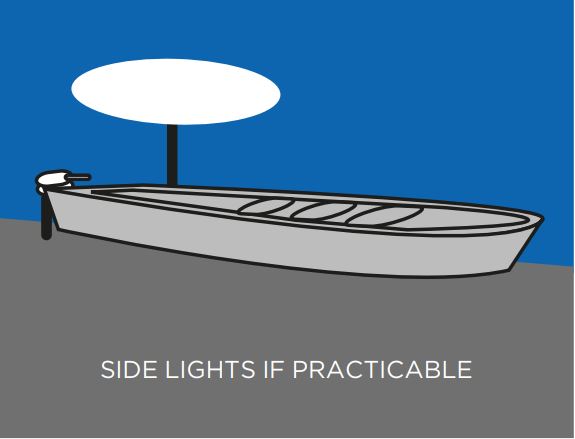
Power-driven vessels of less than 7 m in length, whose maximum speed does not exceed 7 knots, when under way, may exhibit an all-round white light and must also, if practicable, exhibit sidelights.
Larger vessels
Vessels under 50 m in length may exhibit a second masthead light.
Vessels under 12 m in length, sidelights may be combined in one lantern on fore and aft centreline.
Vessels towing
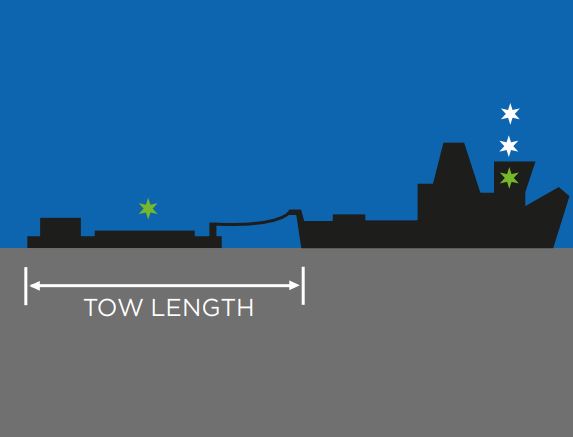
A vessel towing another when the tow length is under 200 m must show two masthead lights (three masthead lights if over 200 m). A yellow towing light is situated over the stern light of the towing vessel. The towed vessel shows side and stern lights.
Vessels at anchor
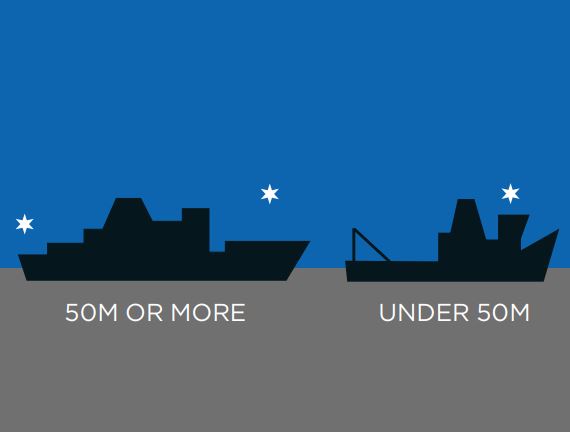
Vessels 50 m or more in length must show two all-round lights, the forward one higher than the aft one. Vessels under 50 m may show a second (lower) light at stern.
A vessel of 100 m or more length shall also illuminate her decks with lights.
Vessels aground
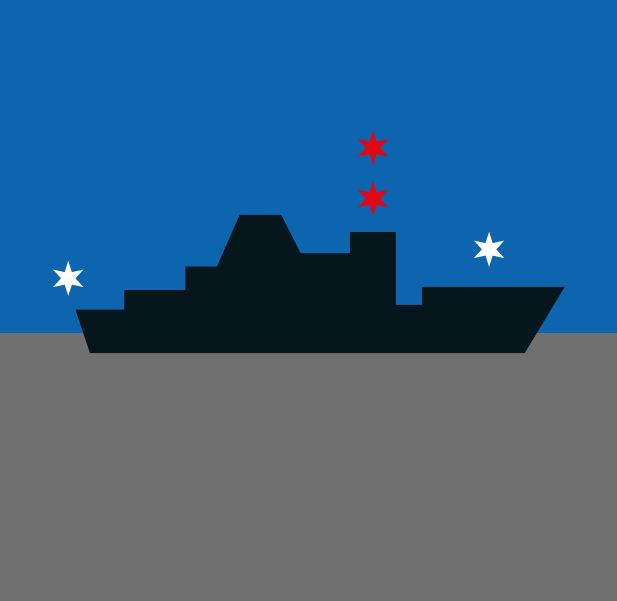
A vessel aground must show anchor lights and two all-round red lights. A vessel under 12 m length is not required to exhibit these lights.
This signal does not mean distress or in need of help, but operators should navigate with caution.
Vessels restricted in ability to manoeuvre
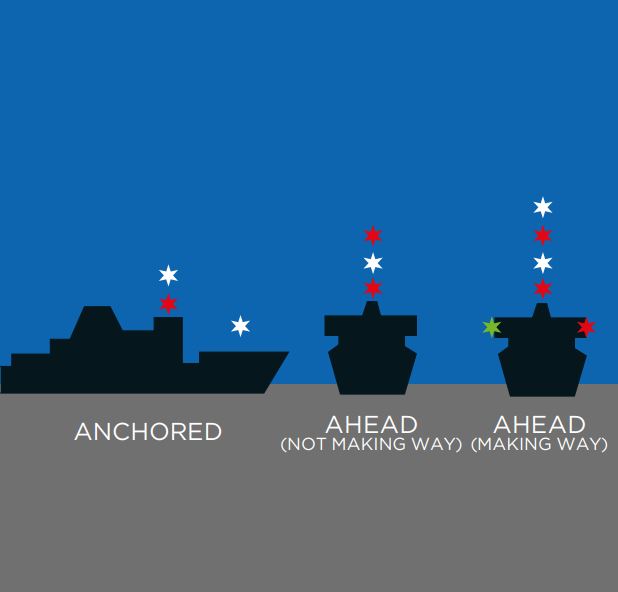
A vessel restricted in its ability to manoeuvre, including diving vessels, must show three all-round lights, with the top and bottom lights being red and the middle light white. When making way through the water, the vessel must also show masthead lights, sidelights and stern light.
When at anchor, the vessel must also show anchor lights. This signal does not indicate
distress or a need for help, but operators should navigate with caution.
Vessels engaged in underwater operations
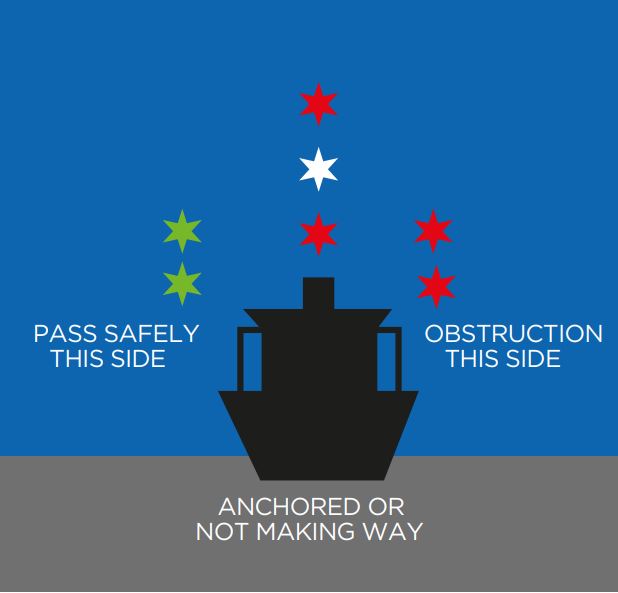
A vessel engaged in underwater operations, including dredging, with an obstruction on one side shall show lights indicating a restricted ability to manoeuvre. It must also show two all-round red lights on the side of the obstruction and two all-round green lights on the side that vessels may pass.
Vessels constrained by their draught
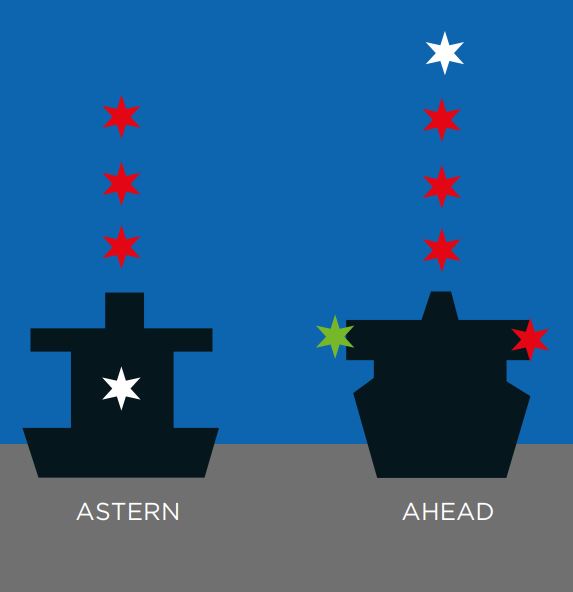
A power-driven vessel restricted to a narrow channel by her draught and unable to deviate from course must show lights for power-driven vessel under way and may also show three allround red lights.
Pilot vessels on duty
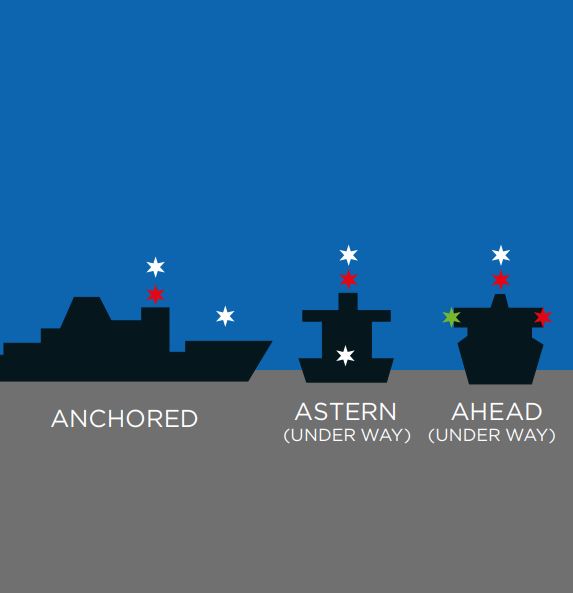
Pilot vessels on duty must show two all-round lights, the top light white and the lower light red.
When at anchor, the vessel shows anchor light or lights and when under way sidelights and stern light.
Vessels not under command
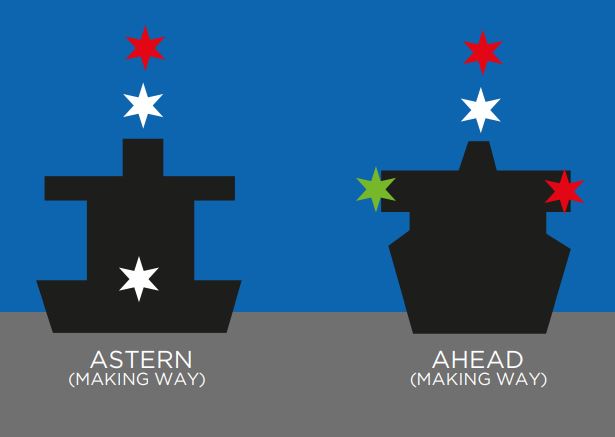
Vessels not under command must show two all-round red lights. When making way through the water, sidelights and stern light are also required. Vessels under 12 m in length, except those engaging in diving operations, are not required to comply with these lights. This signal does not mean distress, but shows inability to manoeuvre. Vessels are required to keep clear of vessels not under command.
Commercial fishing vessels
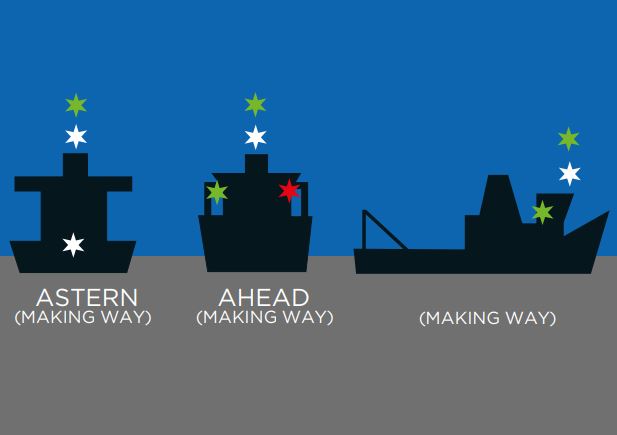
A commercial fishing vessel engaged in trawling must show two all-round lights, the top light green and the lower light white and a masthead light.
A rear masthead light is optional for fishing vessels under 50 m in length. When making way through water, sidelights and stern lights must also be shown.
Fishing vessels (other than trawling)
A fishing vessel that is not trawling must show two all-round lights, the top light red and the lower light white. If outlying gear extends more than 150 m horizontally from fishing vessel, it must show one all-round white light in direction of gear plus sidelights and stern light shown when making way through water.
Vessels working with chains
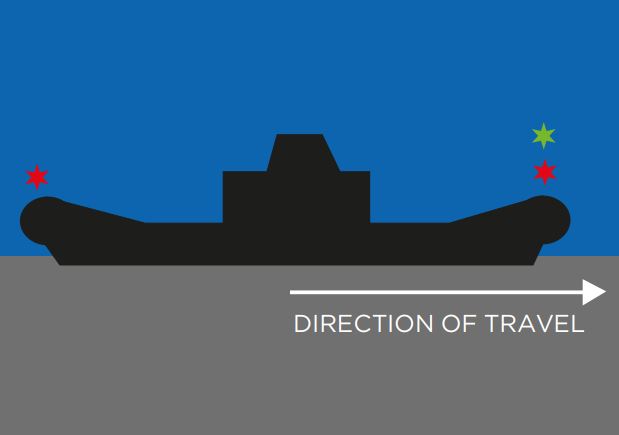
A vessel working in chains, for example, Raymond Island Ferry, must show an allround red light at each end. An all-round green light above the red light at the forward end must be used to indicate the direction in which the vessel is proceeding.
NOTE
Vessels operating in the vicinity of the Paynesville/Raymond Island vehicular ferry must proceed with caution and keep clear of the ferry. Ferries are also along the Murray River and Sydney like Wisemans Ferry
DIVING OPERATIONS
Any vessel with divers operating from it must always display signals by day or night to inform other vessel users.
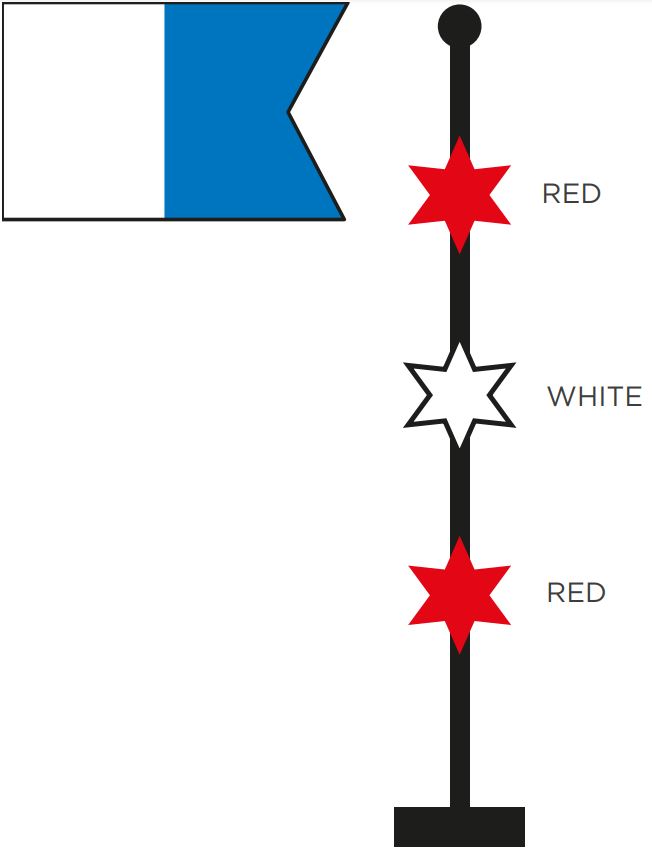
The daytime signal for divers is an international Code Flag ‘A’, at least 750 mm long and 600 mm wide, in the case of a vessel that is less than 10 m. For vessels longer than 10 m, the dive flag must be at least 1 m. It should be placed to ensure all-round visibility.
During night diving, the vessel must show the international signal for a vessel restricted in its ability to manoeuvre. These must be at least three lights in a vertical line, with the top and bottom being red and the middle one white, only where the size of the vessel makes it impracticable to exhibit the lights and shapes otherwise required.
Be aware that divers in the water may not be near a vessel. A diver who is not operating from a vessel that is displaying a dive flag will be attached to a buoy that has a dive flag attached to a rigid replica of the flag. A master of the vessel must not operate at a speed near a buoy on which a dive flag is displayed. Divers may ascend at any time.