Sound signals
using sound signals, such as horn blasts, is another method of communication used to indicate your intentions and position to other waterway users. Operators of other vessels cannot immediately discern your course of action will use a sound signal to communicate with you. This method of communication is typically used by larger vessels, however all vessels should have equipment capable of producing a loud and clear sound, such as a horn blast, bell etc.
DEFINITIONS AND CLASSIFICATIONS
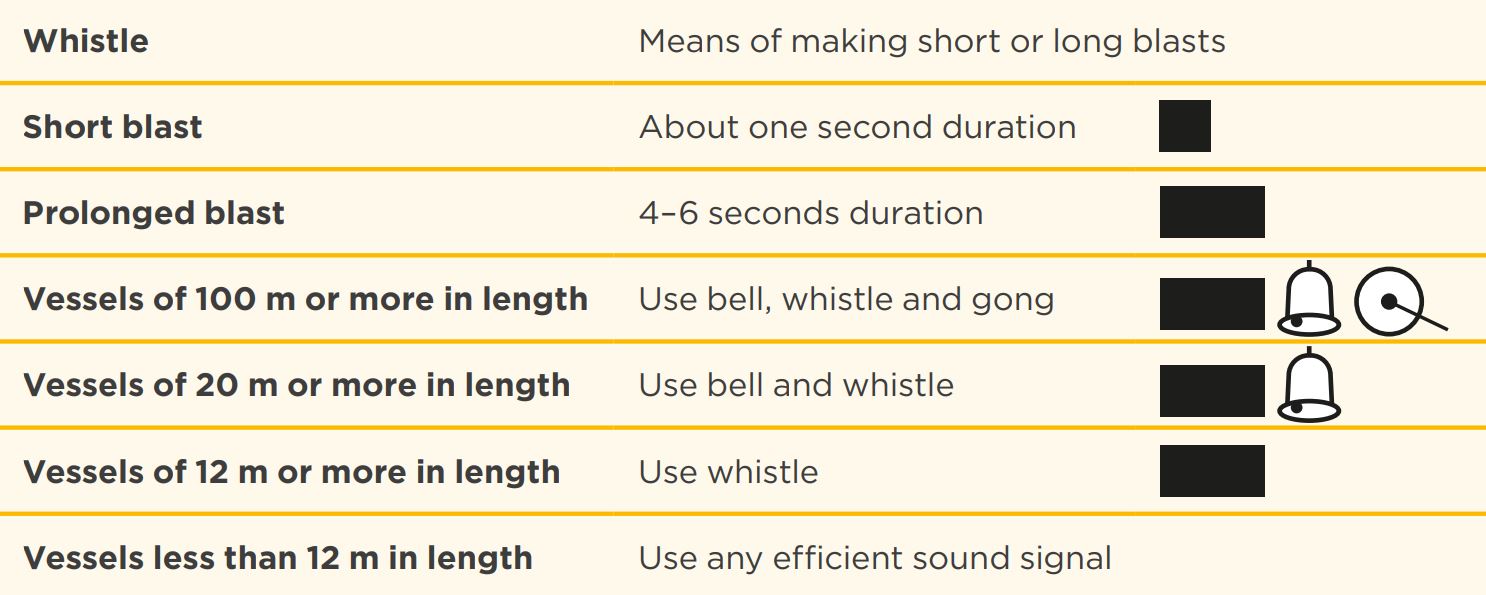
MANOEUVRING AND WARNING SIGNALS
Description
Signal (click to play)
I am altering my course to starboard.
1 short horn blast
I am altering my course to port.
2 short horn blasts
I am operating astern propulsion (reversing).
3 short horn blasts
I am unsure of your intentions.
5 short horn blasts
WARNING SIGNALS (FOR NARROW CHANNELS)
Description
Signal (click to play)
I intend to overtake on your starboard.
2 long horn blasts, 1 short
I intend to overtake on your port.
2 long horn blasts, 2 short
Agreement by overtaken vessel.
1 long horn blast, 1 short, 1 long, 1 short
Vessel nearing blind bend in channel.
1 short horn blast
Vessel other side of bend repeats.
1 short horn blast
SIGNALS FOR RESTRICTED VISIBILITY – DAY AND NIGHT
Description
Signal (click to play)
Power under way and making way.
1 long horn blast – every 2 minutes
Power under way and not making way through water.
2 long horn blasts – every 2 minutes
- Not under command
- Restricted manoeuvring
- Constrained by her draught
- Sailing ship – not under power
- Vessel fishing
- Vessel towing or pushing
2 long horn blasts, 2 short – every 2 mins
Vessel towed – if manned.
1 long horn blast, 3 short – every 2 mins
Pilot vessel on duty – gives normal signals above and may sound four short blasts.
4 short horn blasts
Vessel at anchor (under 100 m in length).
Bell rung for five seconds – every minute
Vessel at anchor (100 m or more in length).
Bell rung for five seconds, gong for five seconds – every minute
Vessel at anchor – may give WARNING of possibility of collision to approaching vessel.
1 short horn blast, 1 long, 1 short
Vessel aground – as at anchor but preceded and followed by three separate and distinct bell strokes.
3 distinct bell strokes
Vessels under 12 m in length may make the appropriate signals given above but, if not, must make some other efficient sound signal every two minutes.
any of the above
NOTE
For more information on what sound signalling equipment you need to carry, view Chapter 3: Safety Equipment or view the Victorian Boating Handbook.
Attempting the licence exam
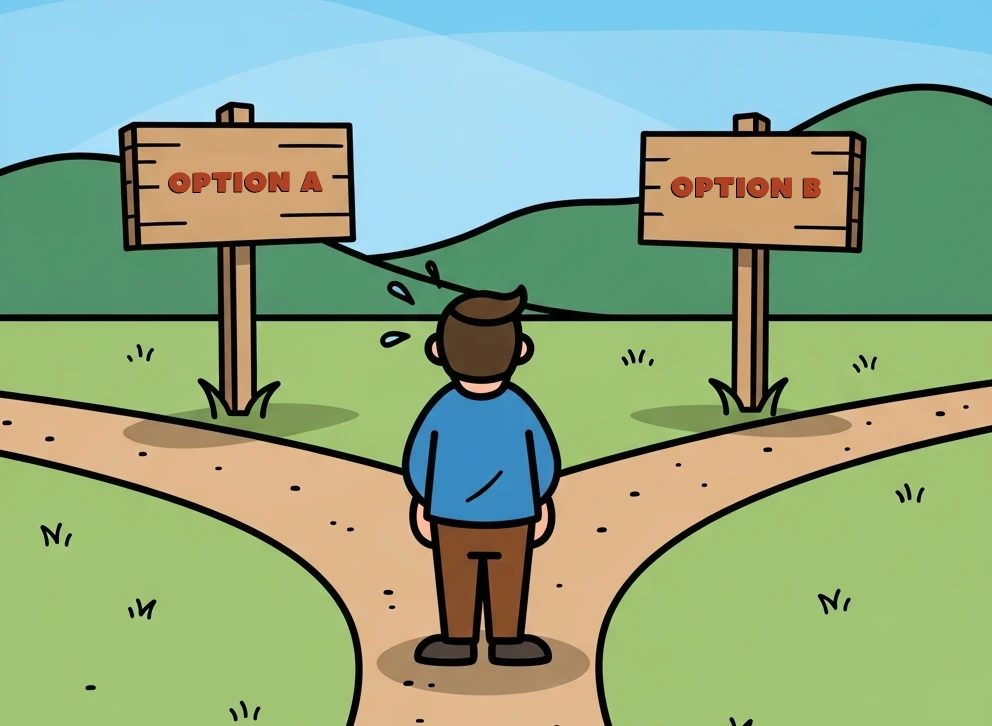
Option A
VicRoads testing: Simply turn up to any VicRoads centre in Victoria for instant licence testing. You can do this anytime, using this course to get the knowledge to smash the test. Immediately get your licence. It’s common for students to take Option A as it is a faster option.
To fast-track straight to the Option A practice exam, click here.
Option B
Zoom revision + testing: Complete this full training course then attend the comprehensive meet and greet zoom revision and testing session, which will take about 2 hours after this course’s education. Certificate will be mailed to you so you can take it into VicRoads to purchase the licence.
For those seeking a deeper dive into maritime safety and responsibility, we offer an exclusive personalised Zoom revision & testing session (Option B). This 2 hour meet and greet experience allows you to meet your trainer, discuss complex case studies, and attempt the licence exam with us instead of VicRoads. It is the ideal choice for students who want to go beyond the basics and gain maximum educational value from their training.
Our personalised Zoom sessions offer a fantastic opportunity to connect with your trainer before you dive in to the licence exam. This 2-hour interactive meeting is designed for more than just a “meet and greet”; it’s your chance to revisit core course topics, ask specific questions, and share a passion for boating with an expert. By the end of the session, you’ll be able to sit the official licence exam. If you prefer, you also have the option to complete your testing at a VicRoads location, skipping this meeting.