PWC operator conduct
Responsible behaviour
Regardless of the type of PWC, it is important for operators to remember that PWCs are a type of vessel and are required to be operated within the rules pertaining to ‘powerboats’. PWCs are generally much more powerful and manoeuvrable than traditional powerboats and, in the wrong hands, can present a danger to the operator and to other people using our waterways.
PWC can be a lot of fun to operate, however you must be aware of the increase danger and disturbance your vessel and activities can bring to other waterway users and the marine environment.
PWC safety study
A recent Monash University study examined safety incident and operator injury data from 2005 to 2015 and found that:
- PWCs are the vessel most commonly involved in marine accidents and account for more than 30% of accidents
- the types of injuries suffered include leg fractures and other injuries to knees, legs and feet
- injuries incurred on PWC are a common cause of people needing treatment at hospital
- these injuries are on the rise every year, with more people being admitted to hospital as a consequence
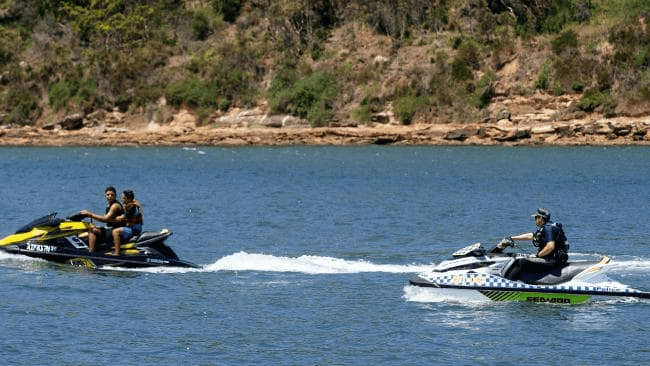
A noteworthy result from this above study was that many of the PWC-involved collisions resulted from a lack of understanding of the rules of safe navigation and/or carelessness.
If you are the operator of a PWC, you should
- check for local rules which may apply specifically to PWCs, such as personal watercraft prohibited zones
- know their limitations as well as the limitations of the vessel in varying conditions
- follow vessel manufacturer’s instructions and maintenance schedule
- observe the rules
- be aware of potential hazards (allowing for the action of others, both reasonable and unreasonable)
- consider joining a PWC riders club or similar organisation to improve skills, knowledge and experience
When death, injury or property damage occurs, report the incident details as soon as possible to the police officers present or to the police station nearest to where the accident took place.
Hoon laws
PWC operators are subject to hoon legislation.
The master of a PWC must not operate at a speed or in a manner which is dangerous to the public, birds and marine animals.

One of the most common complaints received about PWCs is noise. PWC operators tend to congregate near residential or popular recreation areas and drive around repeatedly in the same area. This noise can be irritating to people using the foreshore and to residents often some distance from the water.
Noise annoys
One of the most common complaints received about PWCs is noise. PWC operators tend to congregate near residential or popular recreation areas and drive around repeatedly in the same area. This noise can be irritating to people using the foreshore and to residents often some distance from the water.

Individually, most PWCs are not excessively noisy when compared with other vessels. However, if continually operated close to the shore, in groups, ‘porpoising’ or performing manoeuvres, noise levels increase.
Don’t operate a PWC in the early morning, or when winds are blowing onshore, if you are in populated areas – including campsites. Respect the peace of other people and wildlife and remember, the fewer complaints, the greater chance to enjoy the sport.
Key points
- in surf areas, swimmers may be hidden from view by waves and swell. Keep well away from areas where swimmers are likely to be present or slow right down
- do not cut blind corners – slow down
- if vision is affected by the sun or spray – slow down or stop
- keep well clear of anchored or moored vessels
- in channels and narrow stretches of water, you must operate on the right hand or starboard side
- on circular bodies of water, travel in an anticlockwise pattern unless local waterway rules specify otherwise
- stay out of PWC exclusion zones.
As you’ve probably already noticed, our boating safety and licence courses have a big emphasis on boating responsibly. When you hear about another jetski-related accident, injury or death, it’s not hard to understand why we focus on this message.