Rendering first aid
Accidents do happen, even on open water. For this reason, boaters should be prepared if someone onboard or nearby needs medical help. Proper knowledge, quick action, and the right first aid treatment can slow down an injury before it becomes worse. This lesson won’t give you all the information required with first aid training; for that you’ll need to take a first aid training course and/or obtain a first aid qualification.
Common marine first aid injuries
But below let’s look at some common boating injuries and how to deal with them
Fishhook injuries – first aid
Fishhook injuries occur when you forcefully remove a slippery, flopping fish that is on your line. It can also happen if you walk barefoot near sharp fishing gear.
What to do: If you suffer from fishhook injuries, do not attempt to remove any embedded hooks near sensitive areas. These include near the eye, in a joint, or deep muscle. If the hook is not deeply embedded, you may use the string pull method.
First, tie a short length of fishing line to the injury hold the hook using your fingers. Place it slightly above the fishing line and press it down gently, loosening the hook. Once removed, clean and bandage the wound.
Sunburn – first aid
After a few hours of exposure to the sun, you will feel sunburn coming on. Mild to moderate pain, swelling, skin redness, and blisters are the common signs of sunburn.
What to do: For sunburn relief, cool the skin with a wet towel or take a cool bath. Apply a moisturiser or gel-like formula like aloe vera to the burn. Then, apply hydrocortisone cream and take ibuprofen for pain relief. Drink plenty of water to prevent dehydration.
Severe bleeding – first aid
A fish knife, a fishhook, or even a fish spine can result in cuts and bleeding injuries on a hand or arm. When this happens, the best prompt response for serious bleeding is applying pressure to the wound.
What to do: The first step is to apply direct pressure to the wound with a sterile gauze pad. Elevate the injured area to slow down the blood flow. Only use a tourniquet as the last final measure in an attempt to stop the bleeding if direct pressure is ineffective. Apply the tourniquet 2-3 inches above the wound, closer to the torso. Contact emergency services by dialing triple zero (000) on your mobile phone.
Build a first aid kit
Choosing the right boating first aid kit will depend on the environment you are planning to travel to. Keeping a first aid kit on the boat is a must, but not just any kit will do. Store-bought kits often fall short of having the supplies for accidents on a boat.
Household first aid kits fall short of having the supplies needed for accidents on the water. Marine, medical kits contain supplies geared toward boating scenarios.
The kit should be kept in a sturdy, watertight plastic container, clearly marked and secured in a position where anyone on board can reach it if necessary. A booklet giving basic first-aid methods is an essential addition to the kit.
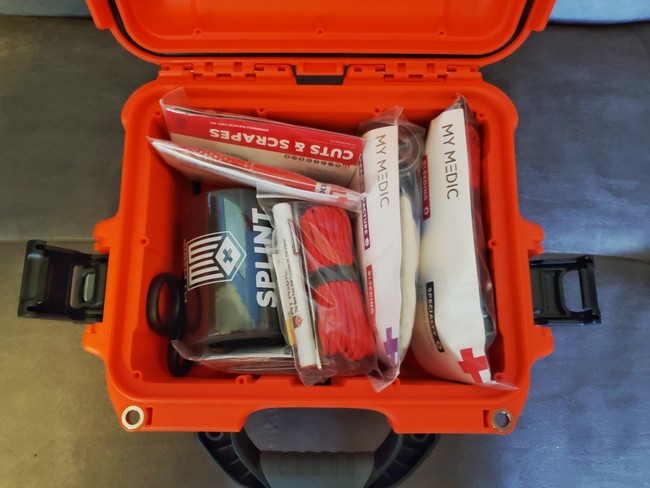
Look for a marine, medical kit that contains all supplies geared toward boating scenarios. Choosing an appropriate fishing first aid kit has much to do with the environment you will be fishing in. you should keep a first aid kit on the boat, but not just any will do.